Austria
The Royal GameAustria is the setting of Dr B’s discreet legal practice and its destruction under National Socialist surveillance: an inherited network of trust that had protected monastic and imperial assets became a liability when an informer helped place him under observation and the Gestapo arrested him at the moment of political upheaval.
A discreet practice and its clients
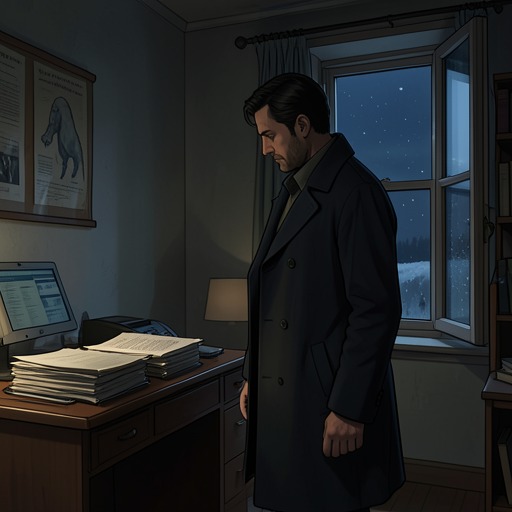
Dr B recalls a firm run first by his father and then by himself, which avoided public cases and new clients. Its work had narrowed to advising and managing the assets of larger monasteries, whose clergy had longstanding ties to his father, and some members of the imperial family. The family’s connections extended across two generations: one uncle had been the Kaiser’s personal physician, another an abbot. In this arrangement, Austria appears not simply as a national setting but as a web of inherited institutions, relationships, and obligations. The practice’s quietness was deliberate. It had no plaque on its door, and its principals avoided monarchist circles in public. That inconspicuous fourth-floor office nevertheless served as a channel for the imperial family’s secret couriers; no Austrian ministry suspected that important messages were being collected or delivered there. Discretion was both the firm’s professional method and its protection.
Surveillance and arrest
When Hitler began seizing Church and monastic property in Germany, Dr B and his father handled negotiations and transactions across the border intended to save portable assets from confiscation. Their work brought them knowledge of secret political dealings involving the Curia and imperial house. At the same time, National Socialists had placed informers in ministries and businesses across neighboring countries. A mediocre clerk, hired on a priest’s recommendation to make the office look like an ordinary business, was assigned only routine tasks, such as handling the telephone and filing harmless documents. He was kept away from the post, important correspondence, and essential files. Despite these safeguards, the clerk became an informer. Dr B later recalled that the employee’s work had shifted from laxity to conspicuous eagerness, including repeated offers to take correspondence to the post. The practice’s real discussions had been moved to a priory or an uncle’s consulting room, and important letters were typed without copies; essential files were taken home. Yet the informer’s surveillance eventually reached Dr B. On the evening Schuschnigg announced his resignation, one day before Hitler marched into Vienna, the SS arrested him. After hearing Schuschnigg’s farewell speech on the radio, Dr B burned the most important papers and, just before his door was smashed in, sent indispensable documents about assets held abroad by monasteries and two archdukes to his uncle in a laundry basket carried by his housekeeper.
Political rupture and departure
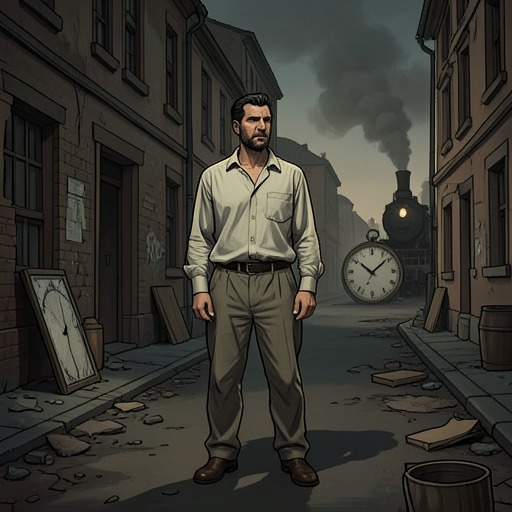
Dr B’s account places the arrest amid the collapse of Austria’s existing political order. He says he learned only after his imprisonment how long the Gestapo had watched him. By the time of his release, Hitler had occupied the Sudetenland, and Dr B was required to promise that he would leave his homeland within fourteen days. The departure deadline turned escape into a sequence of administrative demands—military papers, police and tax formalities, passport, visa, and health certificate—so that he had little time to reflect on his imprisonment. His story presents Austria through a sharp contrast: a country where old clerical and imperial networks had once operated behind an unmarked office door, and a country in which political surveillance could penetrate even that obscurity. The transfers of money and documents were not merely professional transactions; they were attempts to preserve property and information as the institutions supporting Dr B’s work were being dismantled. By the time he recounts these events aboard ship, Austria is both the homeland he has been ordered to leave and the setting of a past he has only recently found himself able to remember.